William Boyd, 4th Earl of Kilmarnock
Creations: Lord Boyd of Kilmarnock 1459, attainted 1469, restored 1482 and again 1546. Earl of Kilmarnock 7 August 1661. Both creations were in the Peerage of Scotland.
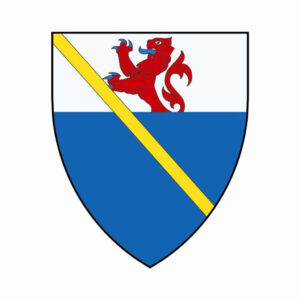
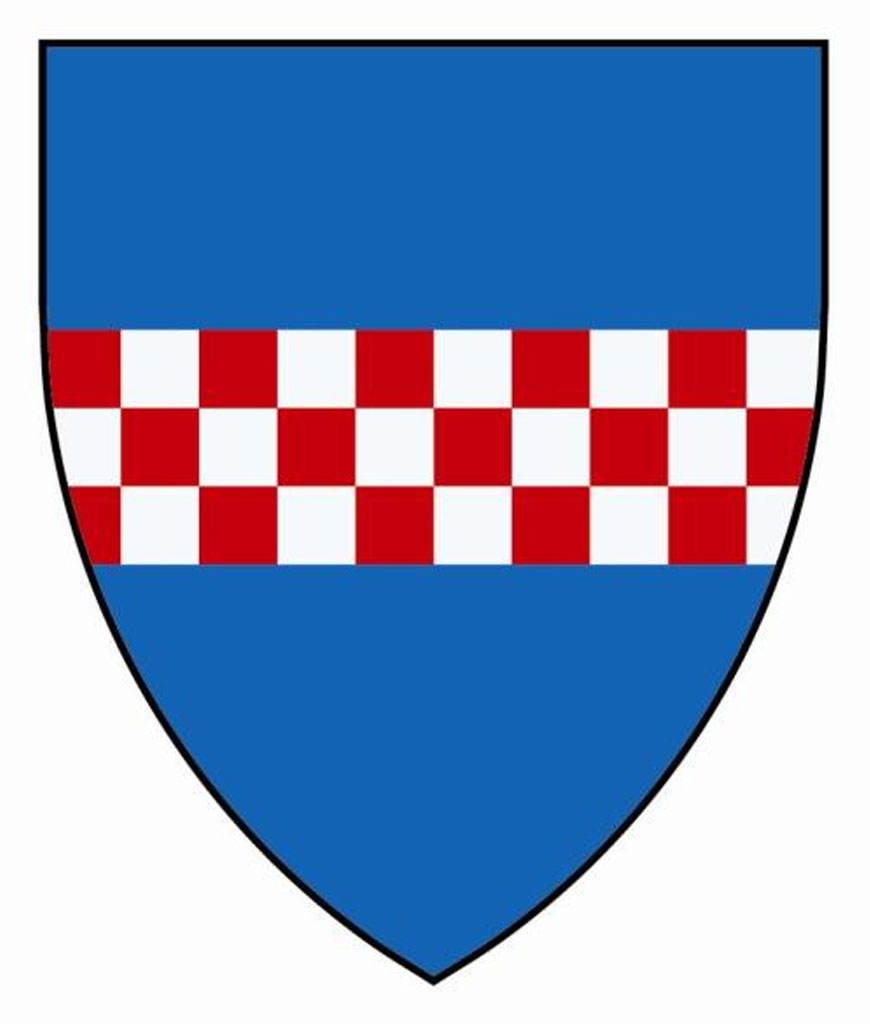
Arms: Azure a fess chequey Argent and Gules.
Crest: A dexter hand erected in pale having two fingers turned in and the rest pointing upwards Proper.
Supporters: Two Squirrels Proper.
Motto: Confide.
SOURCE, NOTES & CREDITS: Blazon and B&W Illustration for background from “The Scots Peerage”, 4th Ed., Sir James Balfour Paul, Editor, 1908, Edinburgh, David Douglas, Vol.V , pp 136-182. Text adapted by D.Q.Wedvick from “The Scots Peerage” noted above and Internet articles regarding the last Earl of Kilmarnock.
William Boyd was born in 12 May 1705 the only son of the 3rd Earl of Kilmarnock, was educated at Glasgow and accompanied his father though but ten years of age to support the government forces in the rising of the Earl of Mar in 1715. He succeeded his father as the Earl in late 1717. But after the battle of Gladsmuir on 21 Sep 1745 he joined Prince Charles Edward Stuart. He was appointed a Privy Councillor, Colonel of the Guards and subsequently a General. He accompanied Prince Charles in the march to Derby and took a leading part in the battle of Falkirk on 17 Jan 1746. Kilmarnock was present and captured at the Battle of Culloden on 16 April 1746. He was tried before Parliament along with Lord Balmerino and the Earl of Cromartie. They were found guilty and sentenced to death. Cromartie was spared, but Kilmarnock and Balmerino were sent to the block at Tower Hill in London on 18 August 1746. Kilmarnock went first and was beheaded without incident. He was at death age 41. The Government provided his coffin which had a brass plate with the inscription,” Gulielmus. Comes. de Kilmarnock. decollatus, 18 Augusti, 1746, Aetat.suae 42,” with an earl’s coronet over it, and a coronet over each of the six handles.
The eldest surviving son of the 4th Earl of Kilmarnock, James, styled Lord Boyd, fought for the Gov’t in the ‘45 and recovered his estates in 1751 and on 19 Aug 1758 succeeded his great aunt as 15th Earl of Errol when he took the surname Hay. On 17 Jun 1831 the then Earl of Errol, a Representative Peer for Scotland, was created in the Peerage of the United Kingdom: Baron Kilmarnock of Kilmarnock, which title since has been used as the courtesy title of the eldest son.
James as the 15th Earl of Errol was present at the Coronation of George III in 1761, officiating as Constable of Scotland, when he accidentally forgot to remove his cap when the King entered, he apologized for his negligence most respectfully, but the King entreated him to remain covered , for he looked on his presence at the solemnity as a very particular honour….
The artwork is a rendering by John Hamilton Gaylor
2013 0501
dqw266@gmail.com