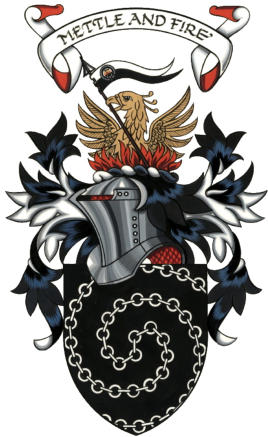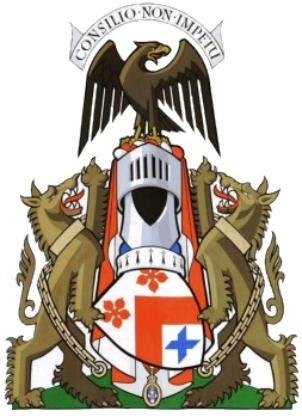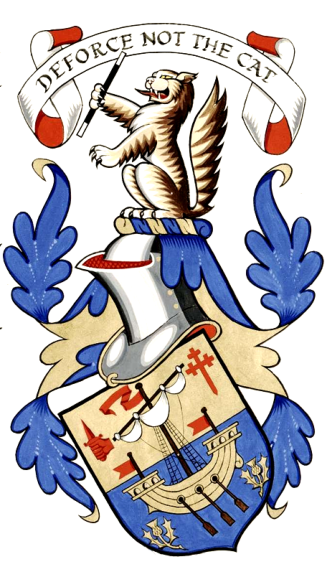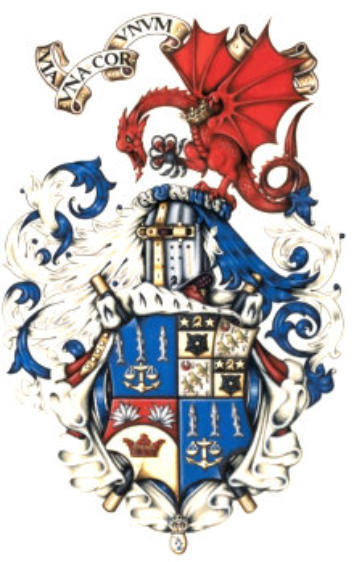
The origins of Arms, a court, and duties of the Lord Lyon in Scotland are somewhat vague but references to Arms appear in written records as early as 1332. The earliest Arms appear in extant records such as the Balliol and Bruce Rolls when Scotland gained independence. Originally, Arms were not really regulated and duties of the Lord Lyon and various heralds were more ceremonial and ministerial in nature. Many of these functions continue to this day, although greatly changed and more structured.
Since those early days, the Court of the Lord Lyon was formally established with oversight of Heraldic matters and Arms in Scotland. Ultimately, the office was given significant authority by various Acts of Parliament including “Officeres of Armes” in 1587, “Office of Lord Lyoun King of Armes and his brether Herauldis” in 1592 and “Ratification in favours of the Lord Lyon King at Armes & c.” in 1669 leading to creation of “The Public Register of All Arms and Bearings in Scotland” in 1672 under auspices of the Lyon Clerk and Keeper of the Records.
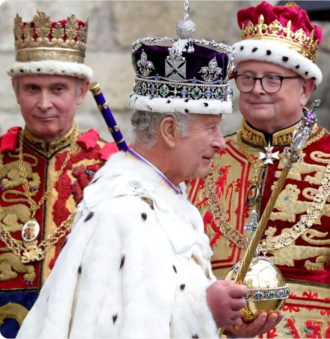
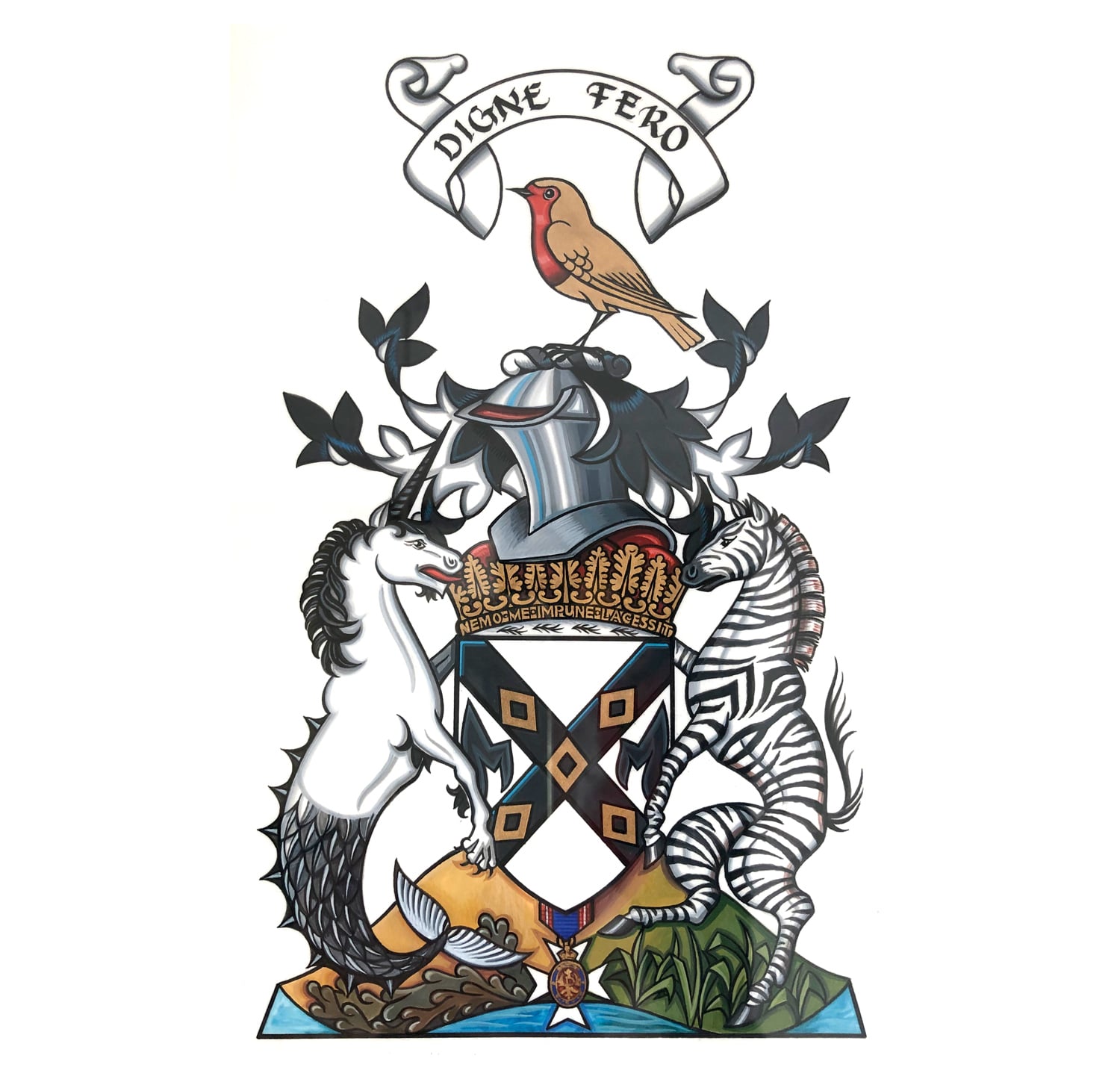
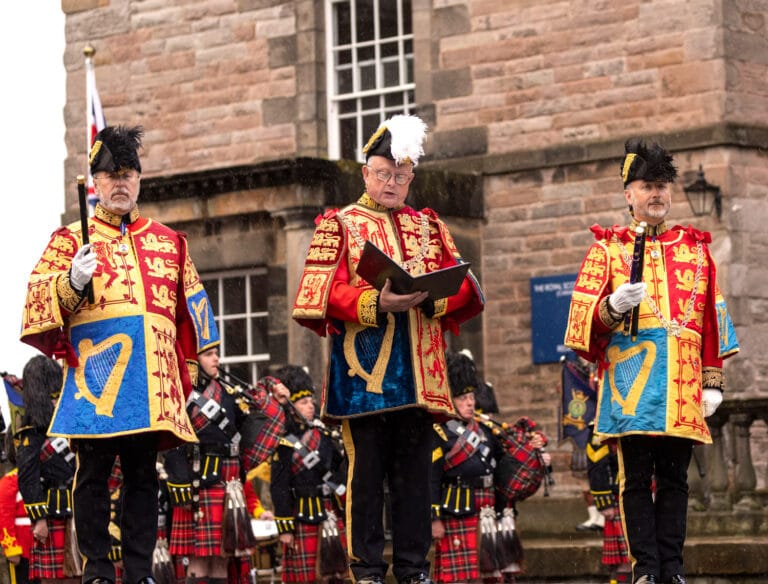
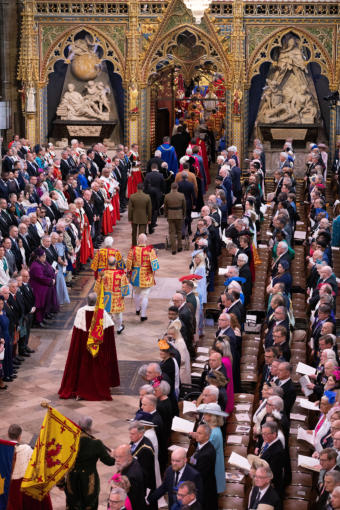
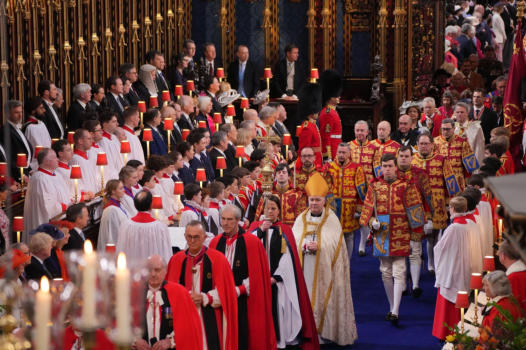
Subsequently, the Court of the Lord Lyon has Ministerial responsibilities acting as heraldic advisor in Scotland to the Sovereign, appointing messengers-at-arms, and conducting national ceremonies such as the Coronation and Grants or Matriculations of Arms in Scotland.
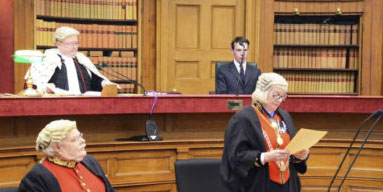
By statute, the Court of the Lord Lyon also has Judicial responsibilities pertaining to questions of succession, authorization and matriculations of Arms, examination and registration of pedigrees, approval of succession to peerages, and ruling on cases prosecuted by the Procurator Fiscal for wrongful use of Arms.
During Queen Victoria’s reign, An Act of Parliament led to needed alterations to the role and regulation of the Lyon Court. Besides the Lord Lyon King of Arms and Lyon Clerk and Keeper of the Records, The Act of 1867 also allowed for an independent Procurator – Fiscal appointed by the Scottish Ministers to decide whether to bring prosecution relating to the illegal use of Arms before the Lord Lyon for judgement; a Herald Painter responsible for overseeing the artistic standards of a team of free-lance heraldic artists; and a Lyon Macer or Messenger-at-Arms who precedes the Lord Lyon when he is exercising his judicial functions and execute summonses and letters of diligence connected with the Court of Session and High Court of Justiciary.
More information is available on Court of the Lord Lyon’s website along with relevant statutes above which can all be found in the Resources section of this website as well as the Documents section of the Court of the Lord Lyon’s website.
Lord Lyon King of Arms
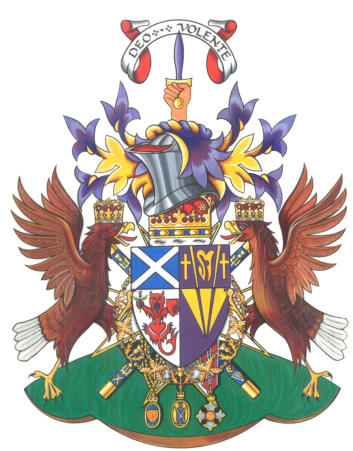
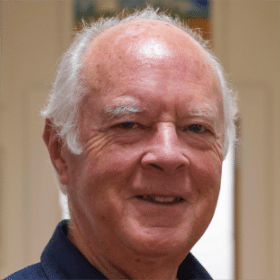
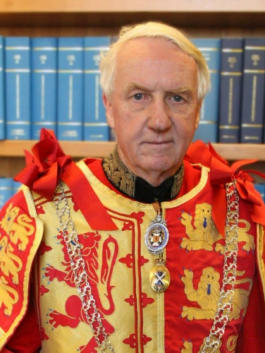
The Right Honourable the Lord Lyon King of Arms, the head of Lyon Court, is the most junior of the Great Officers of State in Scotland and is the Scottish official with responsibility for regulating heraldry in that country, issuing new grants of arms, and serving as the judge of the Court of the Lord Lyon, the oldest heraldic court in the world that is still in daily operation. The current Lord Lyon is Dr. Joseph J. Morrow CVO CBE KC LLD DL FRSE who was appointed to the office on 17 January 2014 and sworn in before the Lord President of the Court of Session on 27 February 2014. A member of the Faculty of Advocates, Dr. Morrow took silk in September 2015. In 2008 he was appointed President of the Mental Health Tribunal for Scotland from which post he retired in 2019.
He has previously served as Her Majesty’s Commissioner for the Mental Welfare Commission for Scotland (1999-2006), as a First-tier Tribunal Judge (Immigration and Asylum Chamber) (2002-2013), and as President of the Additional Support Needs Tribunals for Scotland (2010-2014).In 2009 he was appointed as Vice Lord Lieutenant of the City of Dundee, having served as a Labour councillor for the Maryfield ward until that year. He held the positions of Convenor of the Economic Development Committee and Convenor of the Dundee Waterfront Board, and was Deputy Lord Provost during his time as an elected member. He is the incumbent of the Chapel of Glamis Castle, a former Chancellor of the Diocese of Brechin, an Honorary Canon of St Paul’s Cathedral, Dundee, and was recently installed as Chancellor of the United Diocese of Moray, Ross and Caithness. Lyon Morrow was created CBE in the New Year’s Honours List of 2018 and elected a Fellow of the Royal Society of Edinburgh in 2019.
Officers of Arms
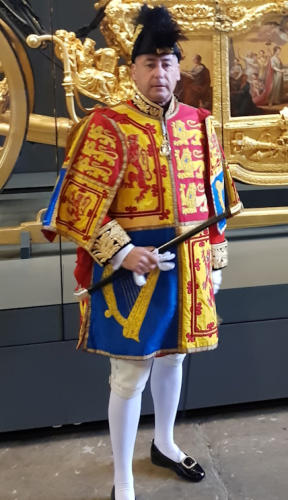
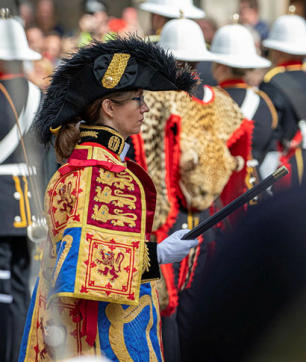
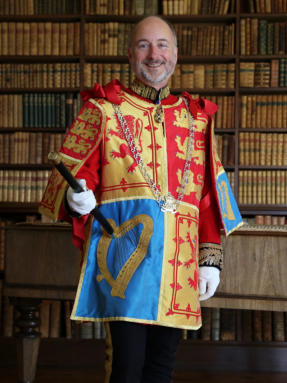
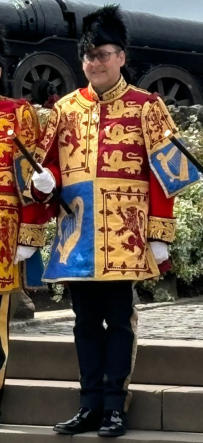
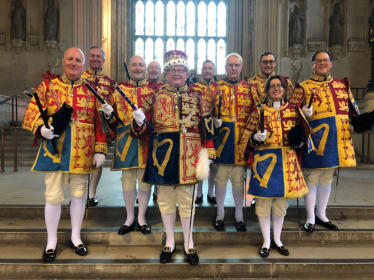
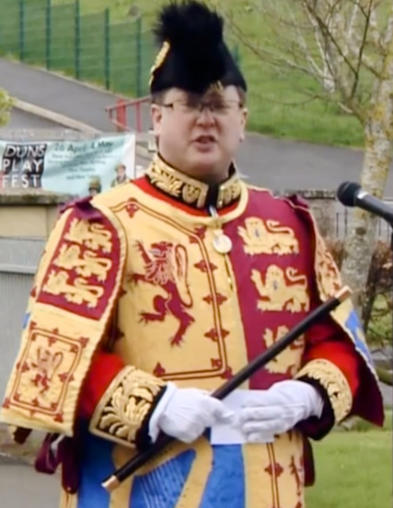
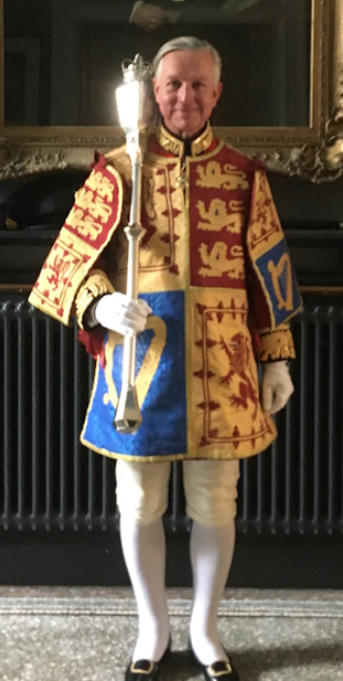
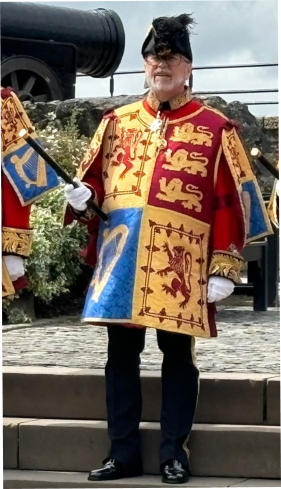
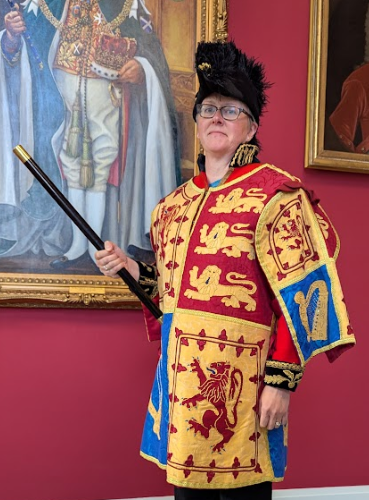
In addition to the Officers of the Lyon Court mentioned above (The Lord Lyon, Lyon Clerk, Lyon Macer, and Procurator- Fiscal), the Lyon oversees a number of Officers of Arms who are actually members of the Royal Household in Scotland. These Heralds and Pursuivants, known collectively as His Majesty’s Officers of Arms, have rights of audience before the Lord Lyon allowing them to represent clients seeking arms. Their other duties are primarily concerned with ceremonial events and they take no part in the day-to-day running of the Lyon Court but may
carry out other non-ceremonial duties, such as presiding over the election of a Clan Chief, at the Lyon’s discretion. Until the Act of 1867 there could be up to six Heralds and six Pursuivants in Ordinary at any one time, reduced by that Act to three of each. There are also Extraordinary Officers of Arms who may be appointed either for a specific event or longer task.
Thistle Officers of Scotland
The Order of the Thistle is the most prestigious Order of Chivalry in Scotland, founded in 1687 by King James VII (James II of England). It is the second most senior order of precedence in England, following the Order of the Garter. The date of the foundation of the Order is not known, although legend has it that it was founded in 809 when King Achaius made an alliance with the Emperor Charlemagne. It is possible that a Royal Order may have been founded by James III (1488-1513), who was responsible for changes in Royal symbolism in Scotland, including the adoption of the thistle as the Royal plant badge. It is known collars were given to individuals since the 15th century.
The Order was formally established by statue under new rules in 1687 to reward Scottish Peers who supported the king's political and religious aims. The King is the Sovereign of the Order, and appointments made to the Order are entirely his personal gift, in recognition of men and women who have held public office or have contributed significantly to national life. The Officers are as follows:
Sovereign – The Sovereign of the Order of the Thistle is the King of Scotland, who is the head of the order and grants membership.
Chancellor – The Chancellor of the Order of the Thistle is responsible for the administration of the order and is a member of the Order.
Dean – The Dean of the Order of the Thistle is a Scottish theologian and a personal chaplain to the Queen.
Secretary – The Secretary to the Order of the Thistle is responsible for the order’s records and administration.
Additional sixteen (16) Knights and Ladies besides The King, The Princess Royal, and The Duke of Rothesay (the Scottish title of The Prince of Wales) have been appointed as Royal Knights of the Thistle.
Protecting the heraldic tradition in Scotland (Modified Nov. 2008)